


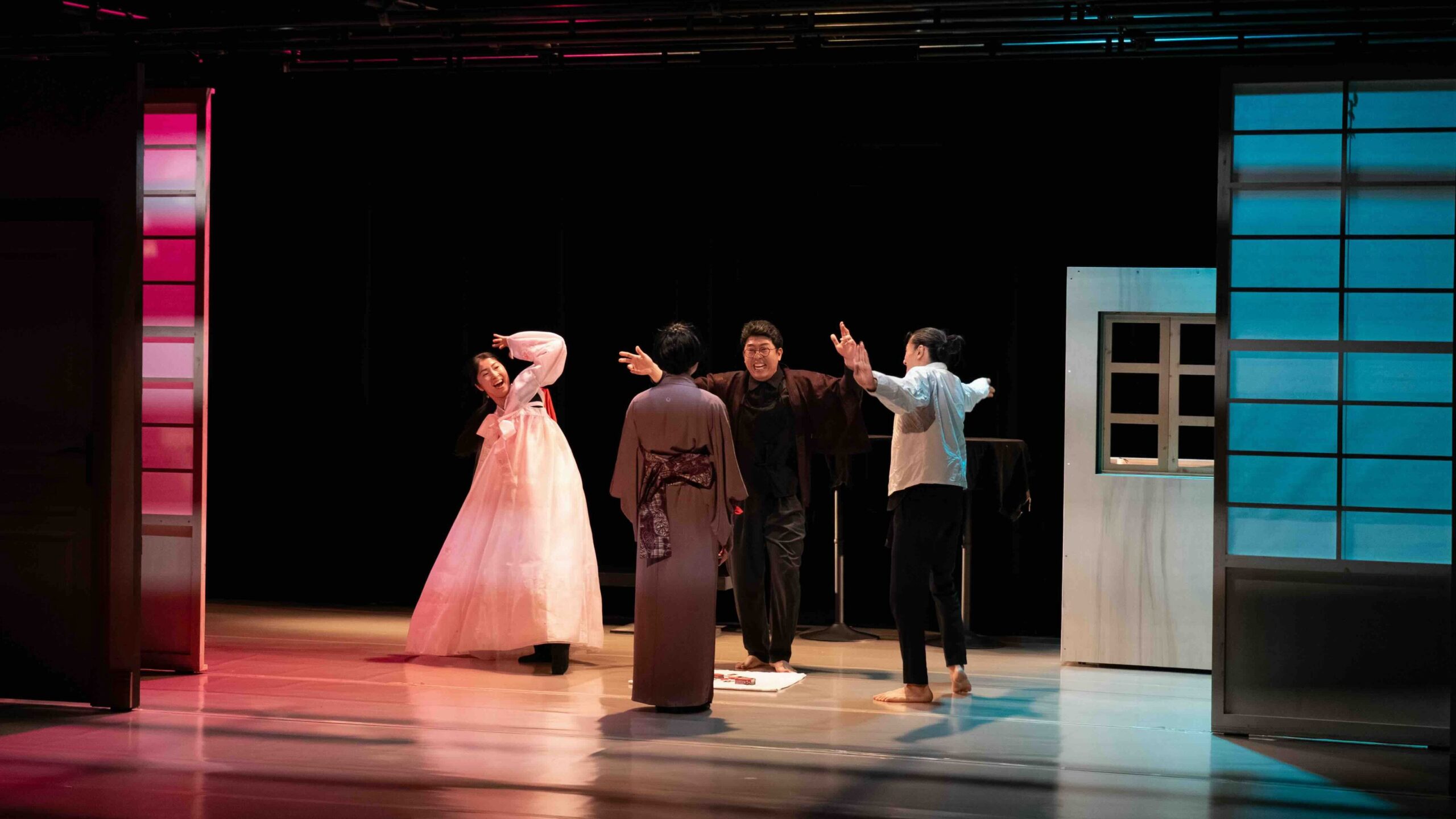
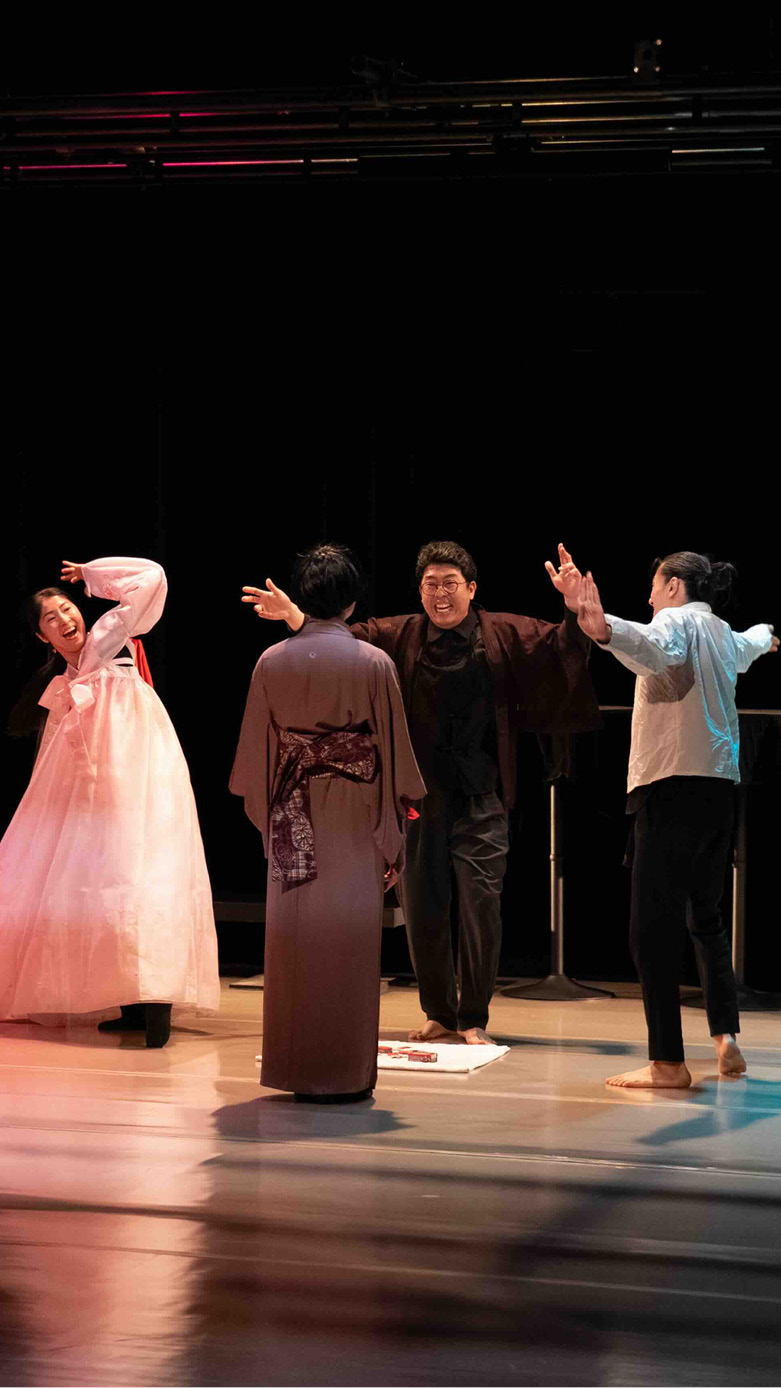
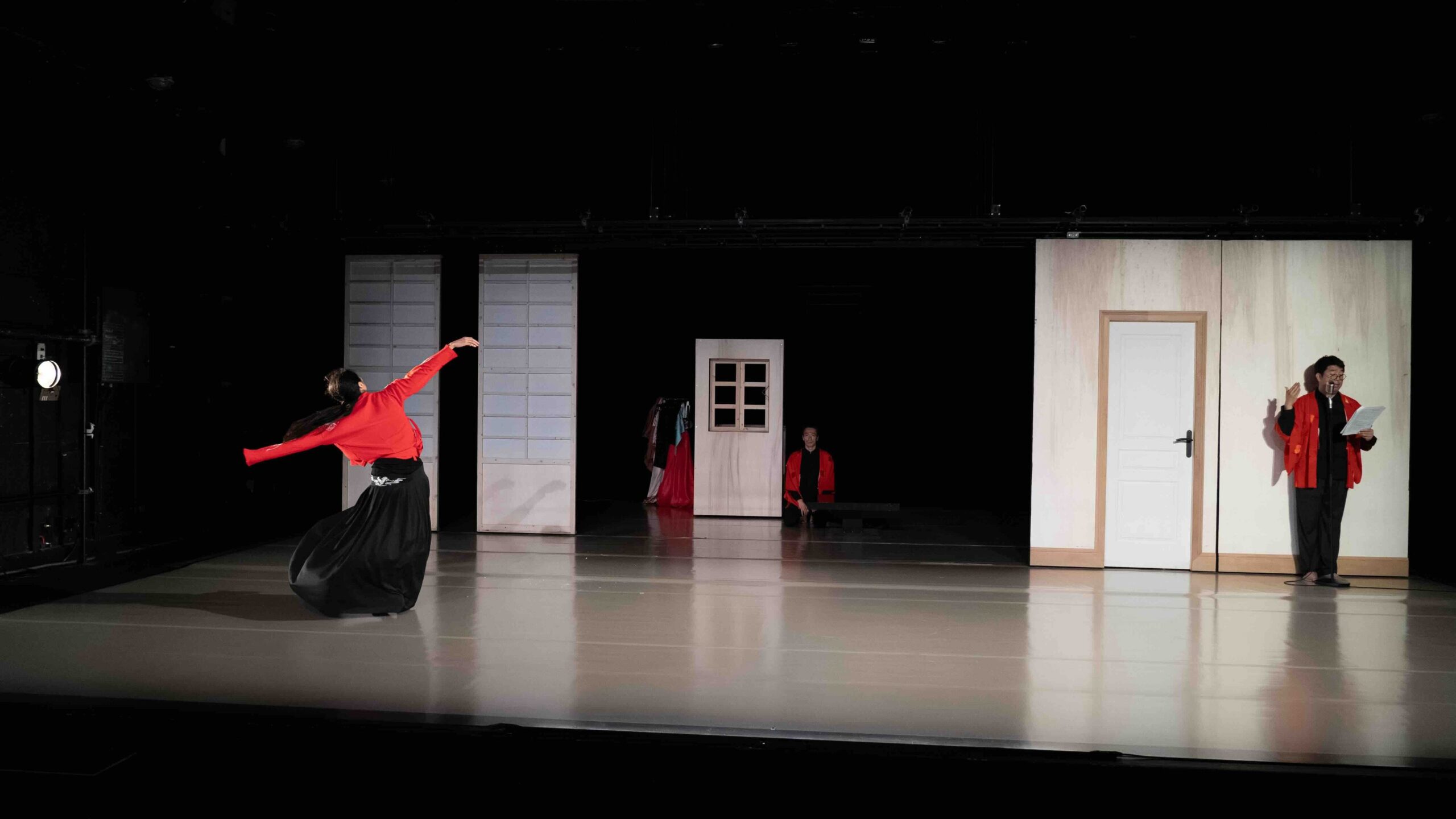
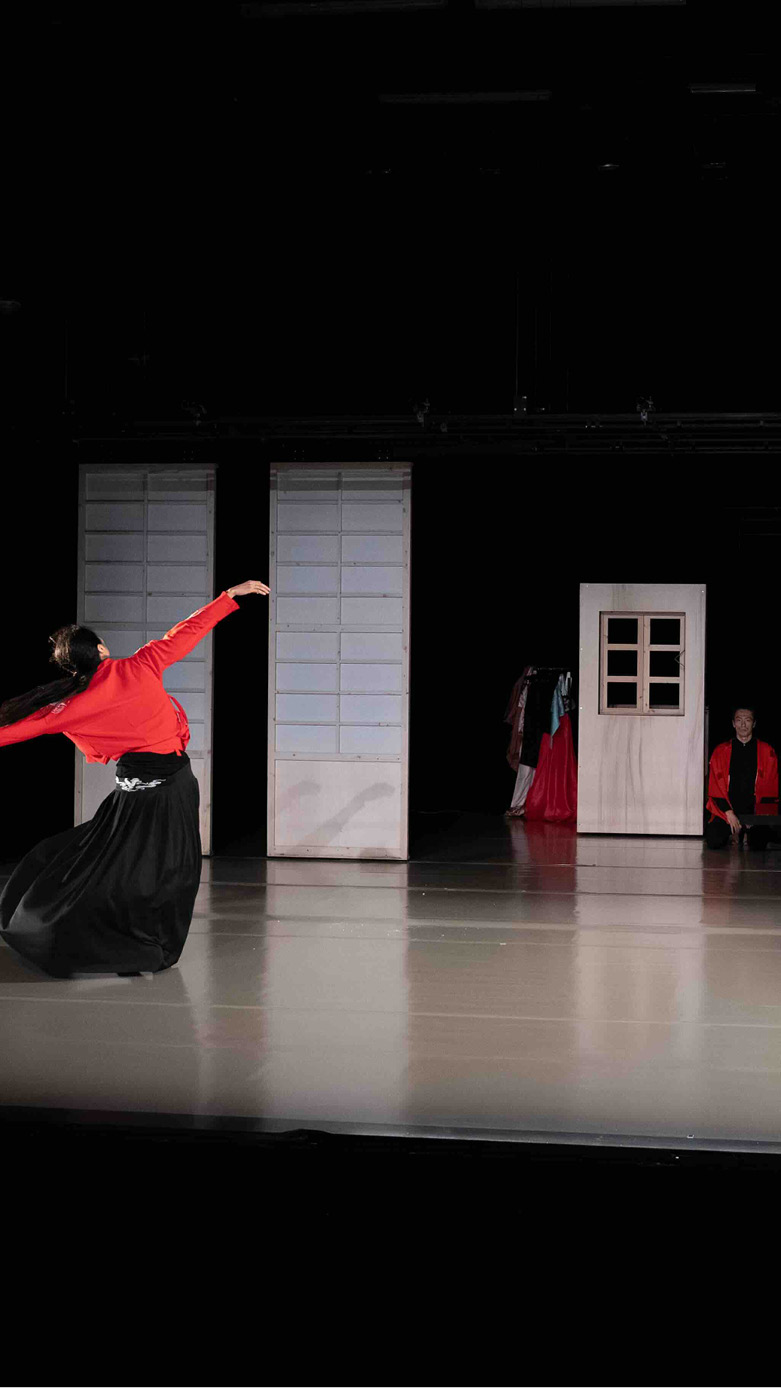
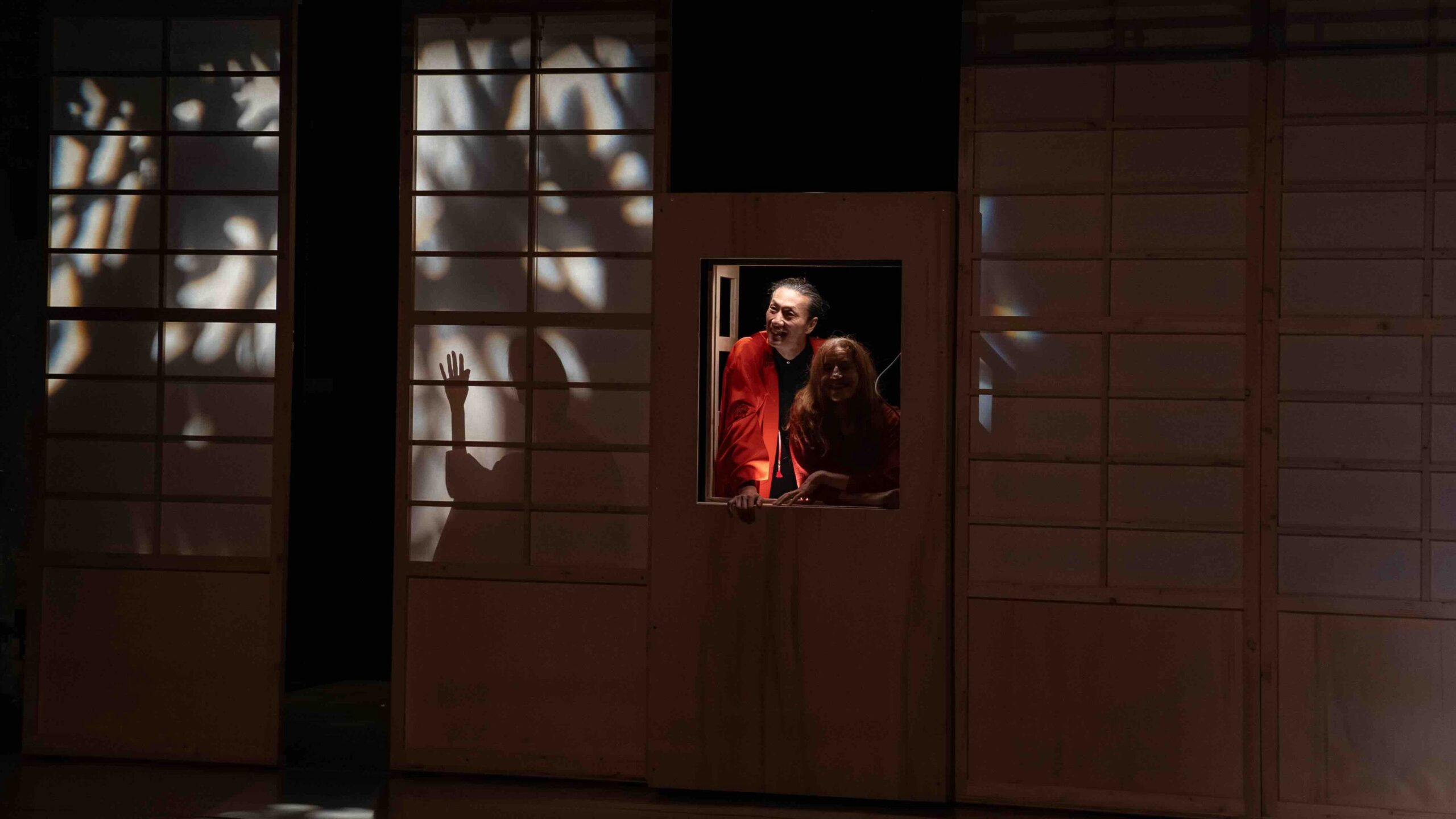
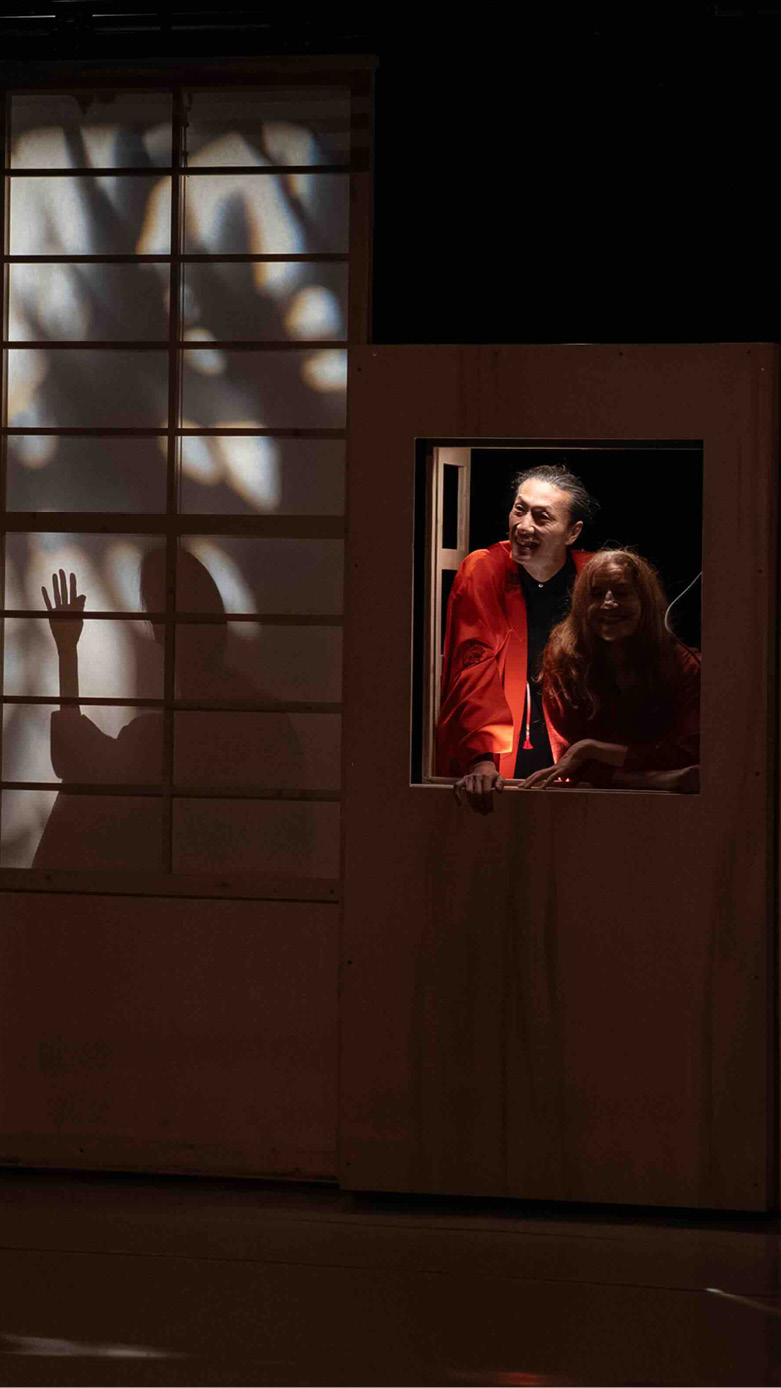


At age 18, Kaori Ito left Japan to pursue her dream of becoming an artist. Long before her, her grandmother had also crossed borders, but under very different circumstances. In 1937, she followed her husband to China, to Manchuria, which was then under Japanese rule. At the end of World War II, she was forced to flee, leaving everything behind.
In this production, the choreographer explores the role of women in the history of migration and the weight of the unspoken truths passed down from generation to generation. On stage, in a surreal atmosphere, actress Catherine Germain portrays a woman who chose to leave her country and who now feels almost like a stranger there. Alongside her, a percussionist, a performer with a background in both classical and contemporary dance, and a dancer who blends contemporary dance with breakdancing take turns embodying a myriad of characters. Together, they traverse eras and territories. As if caught in an endless cycle, they constantly reenact situations and reproduce family patterns.
To write this piece, Kaori Ito drew on her own personal history, the stories of the actors and actresses, and the testimonials gathered from the public as part of the “Micro-Trottoirs” project. Through the lens of family journeys and exiles, she sheds light on life paths—some chosen, others imposed. These journeys continue to shape our identities, memories, and lives to this day.
Born in Japan into a family of artists, Kaori Ito She began training in classical ballet at a very young age, then moved on to modern dance, before becoming a dancer for leading European choreographers such as Philippe Decouflé, Angelin Preljocaj, Sidi Larbi Cherkaoui, and James Thierrée. She began creating her own choreography in 2008, thanks to various commissions (from Ballets C de la B, the National Ballet of Chile, and others), through collaborations (with Aurélien Bory, Denis Podalydès, Olivier Martin Salvan, Yoshi Oïda, Manolo), or for her own company, Himé, which she founded in 2015. There, she developed a series of autobiographical works: *I Dance Because I Distrust Words* (with her father—2015), *Embrase-Moi* (with her partner—2017), and *Robot, Eternal Love* (solo—2018). In 2018, Kaori Ito returned to her Japanese culture, finally feeling empowered to embrace it as her own. In 2020, drawing on letters addressed to the dead, she created a piece for six performers, *Chers*, and an installation in collaboration with Wajdi Mouawad and the Théâtre de la Colline, *La Parole Nochère*. In 2021, convinced of the need to give children a voice and showcase their innate creativity, Kaori Ito created *Le Monde à l’envers*, her first show aimed at young audiences. In 2023, she was appointed director of the TJP—Strasbourg National Drama Center—to develop a project focused on interdisciplinary approaches in the arts, intergenerational engagement, and the involvement of children in the creative process. Upon her arrival, she created *Waré Mono*, a play for children ages 6 and up about healing the wounds of childhood. In addition to *Moé Moé Boum Boum*, staged with Juliette Steiner, she presented, in 2025, a Franco-Japanese production titled *Dance Marathon Express* about exclusion and sacrifice.
distribution

With Catherine Germain, Gil Hyoungkwon, Issue Park, and Nonoka Kato
Artistic and choreographic direction Kaori Ito
Artistic Collaboration and Dramaturgy Adeline Fontaine
Text Kaori Ito and Adeline Fontaine
Choreography and Dramaturgy Assistance Louis Gillard
Set Design, Construction, and Stage Management Anthony Latuner
Construction TJP Workshop
Musical Direction and Composition François Caffenne
Sound Space and Sound Control Room Éric Fabacher
Musical Contribution and Composition Gil Hyoungkwon
Lighting Design and Operation Thibaut Schmitt
Costume Department Camille Humbert
Production Hélène Pouvreau-Séjourné, Pauline Rade
Development and distribution Pauline Rade, Mélodie Derotus
Photo credits ©Anaïs Baseilhac
production details
Production TJP, National Drama Center of Strasbourg — Grand Est
Coproduction Théâtre Grrranit – Belfort National Theater – Eu, Currently Playing
Partners Drac Grand Est, City and Eurometropolis of Strasbourg, Grand Est Region, CEA (European Community of Alsace)
in connection with the show
STUDENT PATHWAYS
OCTOBER
With Kaori Ito and her creative team

to find out more

BIG SCENE
Production | Creation | Premieres

1h
AGES 14 AND UP
October
Wed 07
19H
Thu 08
14H3019H
Fri 09
14H3020H
Sat 10
18H
Tue 13
14H3019H
 Book
in connection with the show
STUDENT PATHWAYS
OCTOBER
With Kaori Ito and her creative team

 Download program
 French
 English
 Japanese
 German